
What Is Lead Management Software? The Complete Guide
Introduction
Acquiring a prospect represents only the initial cost of consumer lending. Marketing budgets attract applicants into your funnel daily, yet much of that financial value vanishes long before underwriters review a single file. Low-quality traffic, duplicate applications, misaligned credit criteria, and slow routing continually erode customer acquisition margins. Paying for clicks or leads guarantees exposure, not portfolio growth. What happens to an incoming file within the first few seconds determines whether marketing spend yields actual financial return.
Lead management software serves as the critical operational buffer between customer acquisition channels and immediate underwriting action. This technological layer gives lenders precise control over incoming applicant traffic before wasting valuable operational resources.
What Is Lead Management Software?
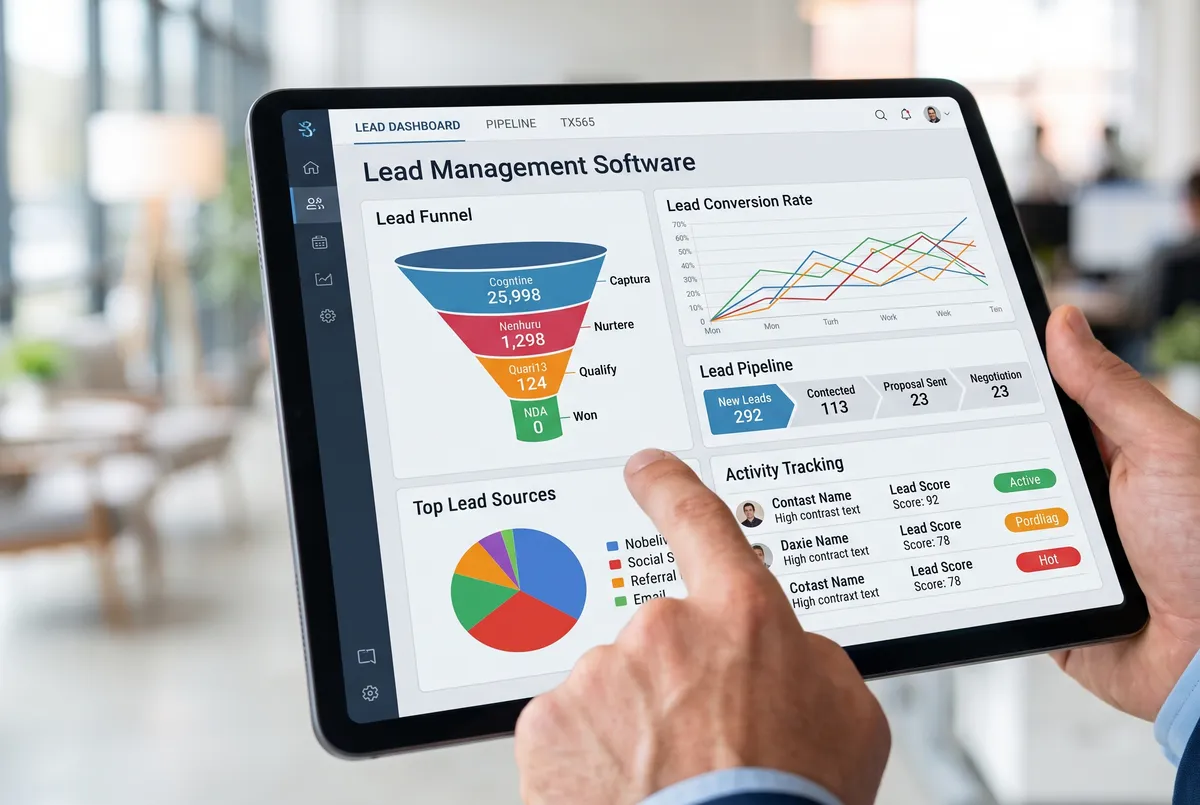
Lead management software is a system that helps lenders control what happens to a lead after it enters the acquisition funnel. It captures applications from different sources, organizes incoming traffic, applies filters, and routes each lead toward the appropriate campaign or lending workflow.
For lenders buying traffic from several channels, that control matters. Leads may arrive through owned websites, affiliates, publishers, or purchased sources, but they will not all carry the same quality or fit the same lending criteria. Tekambi supports lead intake across owned and purchased channels, with tracking that follows activity from submission through routing, conversion, or rejection. That history also helps teams understand which sources produce useful applications and which consume budget without producing enough value.
How Does Lead Management Software Work?
Lead management software follows the application from the moment it enters the funnel and helps determine where it should go next. The process can move quickly, but several decisions happen along the way.
Step 1. A Lead Enters the Funnel
An application may come directly from the lender’s website or through an affiliate, publisher, lead provider, or another acquisition channel. Tekambi supports leads from multiple sources, giving lenders one place to manage incoming traffic. Source information stays attached to the lead, which becomes important when performance is measured later.
Step 2. The Lead Is Checked
Not every submission deserves the same downstream spend. Filters can identify duplicates, poor-quality traffic, or applications that fall outside defined requirements before more resources are committed. Where deeper checks are needed, Valid8 can add bank and identity intelligence and surface risk signals before underwriting.
Step 3. The Application Is Evaluated
Once an application reaches underwriting, the question changes from where the lead belongs to whether the lender wants the credit risk. Origin8 can apply lender-defined rules, scorecards, risk logic, and data from integrated providers to support that decision.
Lead management determines how the opportunity moves. Underwriting determines whether the lender should put capital behind it.
Step 4. The Lead Is Routed
Qualified applications are routed to the appropriate campaign, lender, or workflow based on configured criteria. Geography, source, campaign requirements, and other business rules can influence that route. Good routing keeps viable opportunities moving instead of leaving them stranded between systems or teams.
Step 5. Unused Opportunities Can Be Monetized
A lead that does not fit one lender’s portfolio may still have value elsewhere. Rather than writing off the acquisition cost immediately, eligible declined or unmatched leads can move through Agora Ping Tree. Its real-time ping/post functionality matches opportunities with buyers based on their criteria.
Step 6. The Outcome Feeds Back Into Performance
Every outcome leaves information behind. Teams can compare sources, campaign results, conversions, rejections, and downstream lead activity to see where value is actually being created. Over time, that feedback changes acquisition decisions. The lender learns which traffic deserves more budget, which sources need tighter controls, and where good opportunities are being lost.
Key Features of Lead Management Software
Advanced lead management software should give lenders control over traffic before acquisition costs turn into underwriting costs. That requires more than collecting applications. The system needs to separate useful opportunities from noise, move them intelligently, and show what happened afterward.
1. Multi-Source Lead Intake
Lead traffic rarely comes through one door. Owned websites may generate applications alongside affiliates, publishers, lead providers, and other acquisition partners. Bringing those sources into a common workflow gives lenders a clearer view of what is entering the funnel. More importantly, the original source remains tied to the application, so performance can be traced to its source.
2. Lead Filtering and Quality Controls
Volume can look healthy while quality quietly deteriorates. Duplicate applications, incomplete submissions, poor traffic, or leads outside business criteria consume time before anyone notices the pattern. Filtering helps catch those cases earlier and protects the resources further down the funnel. Underwriting should not become the place where bad acquisition gets cleaned up. Expensive credit and verification calls should be reserved for applications worth evaluating.
3. Real-Time Lead Routing
A qualified lead loses value when it sits waiting for someone to decide where it belongs. Routing rules can route applications based on geography, source, campaign requirements, lending criteria, and other configured conditions. Speed matters here because borrowers rarely submit an application and stop looking. Getting a viable opportunity into the right workflow quickly gives the lender a better chance to act while borrower intent is still high.
4. Campaign and Source Controls
Not every acquisition partner deserves the same rules or budget. One publisher may consistently produce fundable applicants, while another sends volume that rarely progresses beyond initial screening. Campaign controls let lenders manage traffic according to source and business requirements. Tekambi also provides partner and source performance visibility, giving acquisition teams evidence to decide where to tighten criteria, change routing, or allocate the next dollar.
5. Lead Tracking and Performance Analytics
Raw lead counts answer a very small question. Operators need to know which sources fund, which produce rejects, where applications drop, and how much paid traffic never reaches a useful outcome. Tracking lead activity through the funnel connects acquisition decisions with downstream performance. Once those patterns become visible, teams can judge partners and campaigns by the business they produce rather than the applications they send.
6. Lead Monetization
A rejected lead is not automatically worthless. Sometimes the applicant simply falls outside a lender’s credit policy, geographic coverage, product criteria, or current portfolio appetite. Another buyer may see a fit. Agora gives Tekambi users a way to route eligible declined, excess, or unmatched opportunities through real-time ping/post and buyer matching. That creates another possible outcome for acquisition spend that would otherwise stop at rejection.
What Good Lead Management Changes for a Lending Operation
More leads do not necessarily make acquisition healthier. The real improvement comes when lenders can separate traffic worth pursuing from traffic that keeps consuming money without reaching funding.
Common lead management software challenges, such as poor lead quality, disconnected systems, inconsistent data, and limited source-level tracking, can make this process more difficult. The right lead management reduces spend on unusable applications and keeps poor-quality traffic from eating into underwriting resources. Cleaner applications move downstream, while source-level performance shows which partners are actually producing business. Even leads that cannot be funded internally may retain value when another buyer has a different credit appetite.
Lead volume tells you how much traffic you bought. Funded-loan performance tells you whether you bought the right traffic. That distinction matters when CPL looks good, but cost per funded loan tells a very different story.
How Tekambi Helps Businesses Manage and Maximize Leads
Tekambi connects lead management to the decisions that determine an application's value and where it should go next. Incoming traffic can be filtered, routed, tracked, and measured without losing sight of its source.
Manage Incoming Traffic
Campaign controls and source-level tracking help teams manage leads according to their own requirements while keeping performance visible throughout the funnel.
Strengthen What Reaches Decisioning
Before underwriting, Valid8 can add bank, identity, and behavioral signals that provide lenders with more context about the applicant. Origin8 then applies lender-defined rules, scorecards, and decision logic at the underwriting stage.
Recover Value Where Possible
Not every declined or unmatched application has reached the end of its economic life. Eligible leads can move into Agora, where real-time ping/post routing connects them with buyers whose criteria may be different.
Maintain the Downstream Record
When a credit decision requires adverse action, NOAAQ supports automated notice generation, delivery, and tracking based on configured requirements. One application can take several paths. Tekambi gives lenders more control over what happens at each decision point.
Conclusion
A lender cannot control whether every incoming application becomes a funded loan. It can control how intelligently that application is handled. Good lead management makes the economics easier to see. Strong sources earn more attention. Weak traffic gets caught before it consumes additional resources. Qualified applicants keep moving, while opportunities that fall outside the portfolio may still have value elsewhere.
Acquisition will always carry some waste. The goal is to know where it happens and reduce it. Better lead management helps lenders get more useful outcomes from the traffic they already pay to acquire.







 <
<